

Introducing a series of personal testimonial essays that delve into the profound physical, economic, psychological, and severe consequences of being labeled due to one’s differences. However, the most devastating impact, by far, is the forced admission into doorless psychiatric wards.
(Triggering Content Warning: This piece contains firsthand descriptions of psychiatric hospitalization, including physical restraint, forced treatment, sexual abuse, loss of autonomy, and references to self-harm and eating disorders. Reader discretion is advised.)
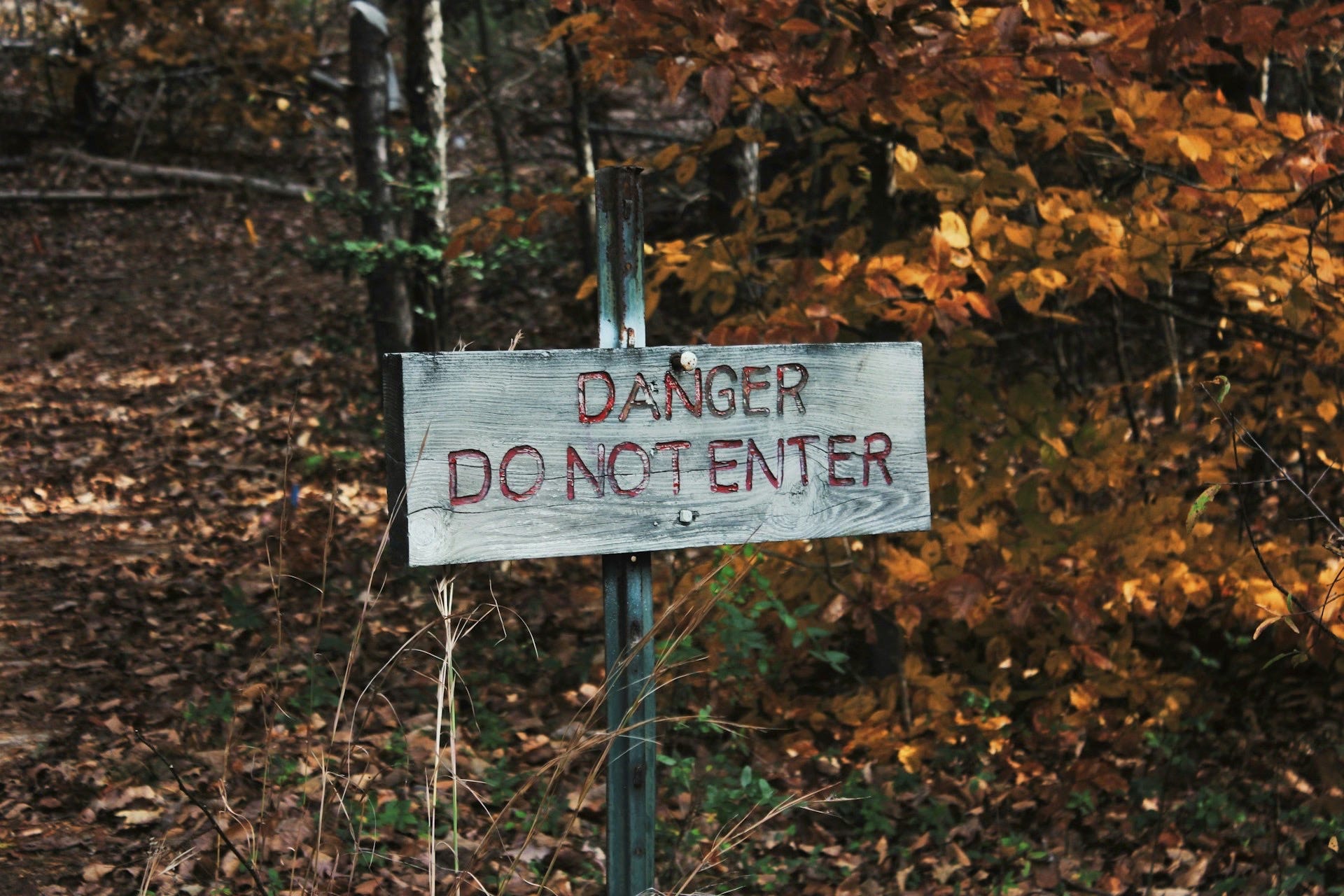
The Normal Maker
Solitary confinement in prisons is usually referred to and described as “The Crazy Maker.” However, the majority of people are oblivious to a rather more damaging confinement;
“The Normal Maker!”
When people think about psych wards, the first thing they picture is what they see in movies; a place where the mad or disturbed, dangerous individuals are kept away from society so as not to poison it. The reality is that those “mad” people aren’t really far from you. They can be a relative, a friend, or a neighbor, and you don’t know about it because it’s a taboo to talk about. Because their families prefer to hide the fact that they have a member who’s “crazy,” fearing it would bring awful embarrassment and shame upon them.
So what is a psych ward?
In this piece, I will be highlighting some of the realities that happen in those doorless madhouses, drawn from my lived experience.
A prisoner who allegedly committed a crime is offered the right to a trial and a lawyer to defend their case. On the other hand, if you’re labeled as crazy, you’re locked up immediately without a chance to appeal; because you’re deemed not mentally fit to defend your case.
Crazy is the moment
when the doors closed,
when the lights dimmed,
and the time froze.
A portal then appeared
and sanity disappeared.
We crossed, dozing off
into deep, sleepless sleep.
A psych ward is where you’re strapped into bed for many nights. That’s the welcoming ceremony. Every part of your body is fixed to the bed by multiple belts, or sometimes metallic chains, until you develop wounds or bedsores. If you even dare to cry out loud or shout, that will only lengthen your stay in the isolation room. If by some atomic luck you managed to pull off one of the belts in order to stretch your arm or leg, the nurse will be right at you in less than 30 sec, as they are watching you 24/7.
It is where the walls talk, the lights dance, and your soul burns a thousand times in front of you, with a camera watching every cry or shout, every nightmare, and even every damn thought. When you wake up from nightmares, you wish to go back to them, as reality is far harsher. So you spend your nights and days escaping from nightmares to reality and from reality back to your nightmares, as there is absolutely no way out.
I look around me again.
No human is within sight.
The ground becomes the ceiling,
Everything appears inverted.
Why can’t I move my arms or legs
while those walls keep shifting?
Are they alive?
Suddenly, I hear deafening murmurs—
Do these walls speak, I wonder?
The only way out of this NORMAL MAKER is by waiting and waiting, until they gradually start taking off everyday, one belt at a time. That’s the moment you know you’ve lost any remnant of fight in you.
It is where cameras are omnipresent; in the halls, the corridors, the rooms, the bathrooms, and even, it feels, in your brain. Your privacy is constantly violated and your existence abused. And while you’re being tortured, you know there’s someone sitting at a desk, perhaps with popcorn, watching and entertaining themselves with your suffering — all the while feeling morally superior, telling themselves they are helping you and that they know what is beneficial for you better than you do.
It is where single thing is a potential weapon you could hurt yourself with — every belt, shoelace, pair of earphones, wire, every open window, open door, every shampoo bottle, bar of soap, tube of toothpaste, bottle of perfume. And you are constantly searched.
You must sleep at a specific hour; if not, an injection is waiting. You must eat what is forced upon you. And God forbid you are someone living with anorexia or any food-related disorder — you are watched vigilantly while eating, and after eating; checked in the toilet to make sure you are not purging; and the machines and feeding tube are always at the ready.
If you don’t feel like eating, you have to eat more. If you want to eat, you must wait and only eat the ration provided to you — to the extent that many of us hide slices of bread in our pockets for the long night ahead.
The psych ward is where you’re locked up without the right to an attorney, and with literally no way out:
If you’re doing well, it means the treatment is working, so you stay.
If you’re doing badly, you have to stay to get better.
If you demand to leave, you’re deemed irritable — so you’re not allowed to go.
If you act indifferent, that means you’re apathic, and again, you’re in need of treatment.
If you know your rights, you’re considered arrogant and are accused of challenging the doctor who knows better.
When your family visits — if they visit — and you speak about the horrors of being incarcerated, they dismiss you and patronize you:
“Just focus on getting better; don’t think about these things.”
Meanwhile, you’re worried that they are worried. Nobody wants you out.
You no longer remember what the sun looks like, or what privacy or freedom truly mean.
If a staff member violates you sexually — and it happens — you must restrain yourself from speaking about it, or you will be branded
HYSTERICAL!
If another patient tries to intervene, they will be told they are
HALLUCINATING!
and they will receive the injection and be sent back to bed. If you speak up, you are imagining things, and you receive the injection to calm down — while your abusers walk free to harm others.
That is when reality hits. No one will believe you.
No one will ever believe you again!
Your word doesn’t count. Your testimony has no value. You are not even considered capable of committing a crime — and while that might seem like a fortune, in reality it means you have lost all credibility, choice, and autonomy.
Even when you get out, you forget what normal looks like and what freedom feels like. You cannot adjust to the jarring reality outside, so you develop a sort of Stockholm syndrome and find yourself longing for confinement.
There is no way out - until there is simply no space left for you.
I have been forcibly admitted to approximately ten psych wards across three different continents. So if you think this only happens in a so-called backward, developing country and that where you live it’s different? Believe me, it is not different; there are only varying shades of the same torture.
The one thing that might differ in a more developed country is the presence of a judge who rules on admission — but that judge hears from the lead psychiatrist, administrators, and lead nurses on the committee deciding your fate. Who do you think they will believe: the seasoned, highly qualified doctor, or your “crazy” mind?
Perhaps the other advantage in a developed country is higher-quality surveillance cameras, or stronger restraints.
In fact, psych wards were born in those same developed countries — namely the United Kingdom and France. After the epidemic of leprosy subsided, the isolation houses where patients had been kept became sites for all of society’s outcasts: the mad, the beggars, the criminals, the political dissidents.
Decades later, the criminals and political dissidents were moved to prisons, and the mad remained in those haunted houses. After the birth of modern psychiatry in the 20th century,
the guards were replaced by doctors called psychiatrists
and that is their role to this day.
I want to end this essay by saying that it is a shame that societies everywhere turn a blind eye to what happens inside these doorless prisons.
I am privileged to have gotten out — and even more privileged to be able to tell the tale.
THE END
© The stranger The two poetic stanzas in the middle of the essay are part of the poems; Narrated Arrest, Lived Madness and The Portal of Insanity
Author’s Note: This essay is the first of a series of personal accounts, poems, testimonials, and studies that criticizes the systematic abuse caused by the current medical system, especially the psychiatric one with its master weapon, the Psychwards.
Writing is not what I do — it is what I chose over everything else. It is not a hobby, but rather a choice I make every day — to write instead, to stay here, to keep going. If these words have been worth your time, perhaps they are worth a quiet coffee too. Every contribution is not just support — it is permission for the next poem to exist.


I don't know where to even being with this.
So painful I can't just give you a hug right now.
When I was a journalism student, me and my friend went to a couple psych wards to do an article.
We chose psych wards because we thought it would make for an interesting report.
But what we experienced and saw, would change our lives forever. The inhuman treatment, the complete lack of tact and empathy from both the personnel and family members.
We were only 17 and let me tell you, we got the biggest reality check after that.
During our investigation we also came across the documentary Titicut Follies (1967), which also goes over this topic in a very crude way.
Bottom line is, thank you for talking about this. You're brave. You're a survivor and I'm proud of you.
Love you. Kasu 💜
Thank you for sharing your heartbreaking experience 💔
The real freaks walk outside,
the freedom seekers forcefully confined.